A vehicle breakdown can turn an ordinary day into a stressful situation. Your car may stop working after an accident, develop a mechanical problem, or become unsafe to drive because of a flat tire or damaged suspension. When this happens, calling a towing company is often the quickest way to move your vehicle somewhere safe. However, agreeing to a tow without understanding the service details can lead to unexpected charges, delays, or problems during transportation.
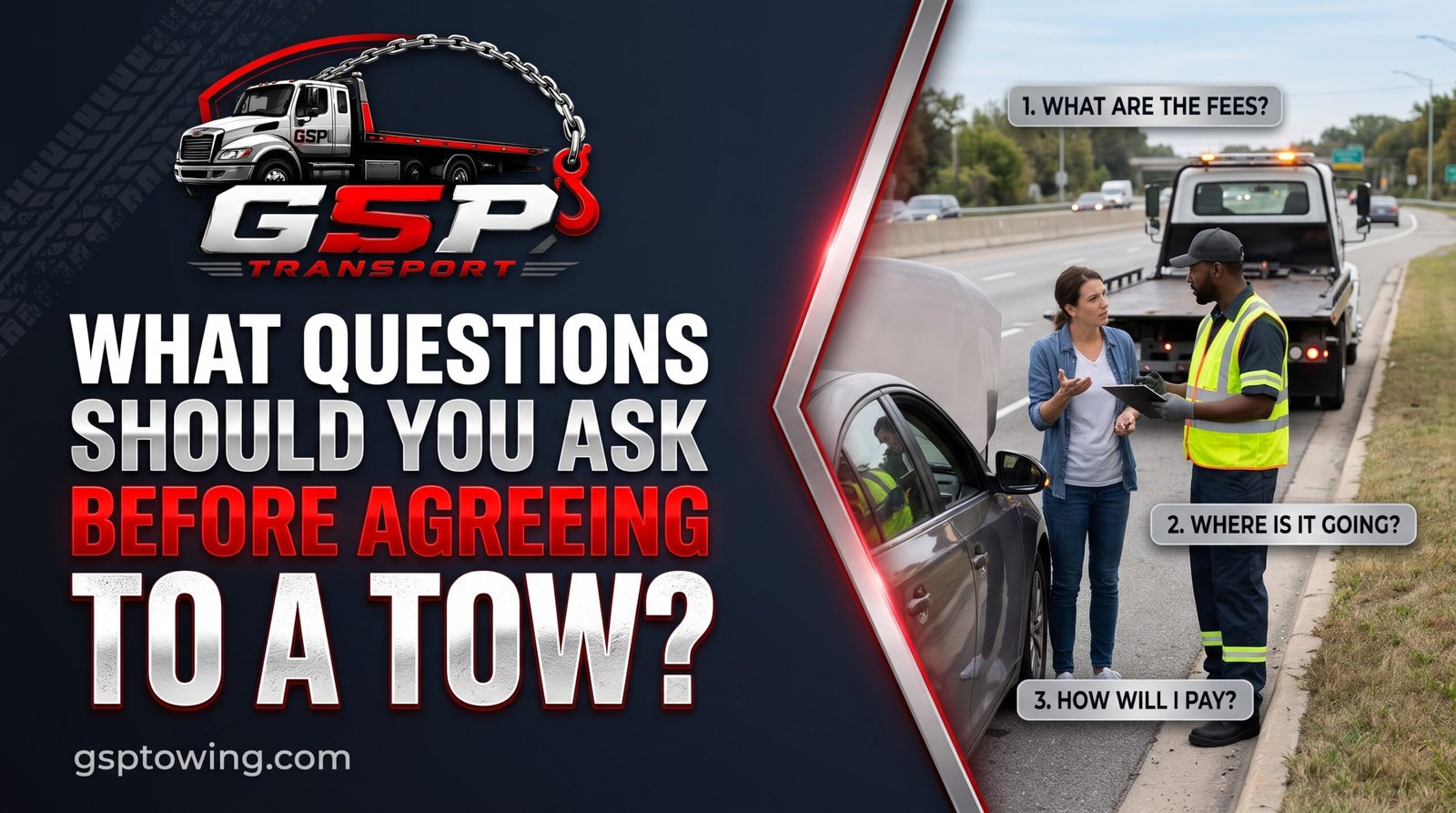
Before allowing a tow truck operator to move your vehicle, take a few minutes to discuss the important details. Ask about the total towing cost, estimated arrival time, equipment, destination, and how your vehicle will be handled. These details help you understand what you are paying for and what to expect throughout the process.
Choosing a dependable provider like GSP Towing can make the experience easier, but clear communication still matters. A professional towing service should explain the process, provide an upfront estimate, and help you choose an appropriate towing option for your vehicle. Knowing what to discuss before the truck arrives can protect your vehicle and help you avoid unnecessary confusion.
Start With A Clear Towing Estimate
The first thing to discuss is the price. Towing costs can vary depending on the distance, vehicle type, location, equipment required, and difficulty of the recovery. A short-distance car towing may involve different charges than transporting a pickup truck or recovering a vehicle from a difficult position.
Before agreeing to the service, ask for a complete estimate instead of relying on a basic starting price. Find out if the quoted amount includes the hookup fee, mileage, labor, and any additional charges. If your vehicle is stuck in a parking garage, roadside ditch, or another difficult location, ask whether extra equipment or recovery work will affect the final cost.
You should also confirm how payment works. Some providers accept different payment methods, while others may have specific requirements. Understanding these details before the tow begins helps prevent disagreements when the service is complete.
A trustworthy towing provider should explain its pricing clearly. GSP Towing highlights upfront estimates and transparent pricing as part of its service approach. Getting these details in advance gives you a better understanding of the expected expense and helps you make an informed decision.
Get A Realistic Arrival Time
When your vehicle breaks down, waiting beside the road can be uncomfortable and sometimes dangerous. Traffic, weather, and your location can make the situation even more difficult. That is why the estimated arrival time should be discussed before you confirm the service.
Ask how long the driver is expected to take and whether the estimate accounts for current traffic conditions. A dispatcher may provide an approximate arrival window rather than an exact time. This is normal because road conditions and other service calls can affect travel.
You should also confirm how the company will update you if the driver gets delayed. A phone call or message can help you stay informed instead of waiting without knowing what is happening.
If your vehicle is stopped near a busy road, move to a safe location if possible. Turn on your hazard lights and follow local roadside safety guidance. Do not stand between your vehicle and passing traffic while waiting for assistance.
An honest arrival estimate helps you plan your next steps. It also gives you a chance to arrange a safe place to wait, inform someone about the delay, or make other necessary arrangements.
Match The Tow Truck To Your Vehicle
Not every towing method is suitable for every vehicle. The type of vehicle, its condition, and the reason it cannot move all affect which equipment should be used. Choosing the wrong towing method can create unnecessary risks, especially when a vehicle has damaged wheels, suspension problems, or other mechanical issues.
Before agreeing to a tow, explain your vehicle’s make, model, size, and current condition. Mention whether it has been involved in an accident, has a flat tire, or cannot roll properly. These details help the dispatcher determine which truck and equipment may be appropriate.
Here are some common towing options:
- Car towing: Suitable for transporting many passenger vehicles that cannot be driven safely.
- Flatbed towing: Places the vehicle on a flat platform, keeping all four wheels off the road during transport.
- Motorcycle towing: Uses equipment designed to support and secure motorcycles during transportation.
- Pickup truck towing: Helps move pickup trucks that require suitable towing equipment.
- Commercial vehicle towing: Supports businesses that need disabled work vehicles transported.
Flatbed towing can be a suitable choice for certain damaged vehicles or situations where keeping the wheels off the road is important. However, the correct method depends on the vehicle manufacturer’s recommendations and its condition.
GSP Towing lists car, motorcycle, flatbed, pickup truck, and commercial vehicle towing among its services. Discussing your vehicle’s needs before dispatch helps the provider identify an appropriate option.
Confirm The Destination Before Pickup
Another important detail is where your vehicle will be taken. Some drivers assume the towing company will automatically transport the vehicle to the nearest repair shop. That may not be the destination you want.
Before the driver begins loading your vehicle, clearly explain where it needs to go. This could be your preferred mechanic, dealership, home, or another suitable location. Make sure the dispatcher understands the complete address and confirms that the destination is within the service arrangement.
Distance can affect the final price, so ask whether changing the destination will increase the estimated cost. If you are unsure where to take your vehicle, you can discuss possible options with the towing provider before making a decision.
It is also worth checking whether the destination can receive your vehicle. A repair shop may be closed, a storage facility may have restricted access, or a business may require advance notice before accepting a vehicle.
Understand How Your Vehicle Will Be Protected
Vehicle safety should be a priority throughout the towing process. Even when a car cannot be driven, it still needs proper handling during loading, securing, transportation, and unloading.
Ask how the operator plans to secure your vehicle. Depending on the towing method, this may involve straps, wheel restraints, or other suitable equipment. If your vehicle has low ground clearance, damaged bodywork, or unusual modifications, mention these details before loading begins.
You should also explain any existing damage. Take photographs of visible dents, scratches, broken lights, or damaged wheels before the vehicle is moved. These pictures can help you document its condition before transportation.
Remove personal belongings and valuables if it is safe to do so. Keep important documents, keys, and essential items with you. If the vehicle contains special equipment or fragile items, tell the operator before the tow begins.
Check For Extra Charges And Service Limits
A towing estimate may not include every situation. Additional work can sometimes be required if the vehicle is difficult to access, stuck in mud, positioned in a ditch, or unable to roll. These circumstances may require extra labor, specialized equipment, or a recovery procedure.
Before accepting the service, ask which situations could increase the quoted amount. Find out if there are additional charges for waiting time, difficult access, after-hours service, or extra mileage. Do not assume these costs are included unless the provider confirms them.
You should also explain any unusual conditions at the pickup location. For example, a vehicle inside a narrow parking structure may require different equipment than one parked in an open driveway. Sharing this information helps the company assess the job more accurately.
If the original plan changes after the driver arrives, ask for an updated estimate before approving additional work. This gives you a chance to understand the new cost and decide how to proceed. Clear pricing is important, but so is understanding the limits of the service. Knowing what is included can help you avoid unexpected expenses and make the towing process more predictable.
Compare Providers Beyond The Lowest Price
Price is important, especially when an unexpected breakdown affects your budget. However, choosing a towing company based only on the lowest quote can lead to problems if the service does not match your vehicle’s requirements.
A better comparison considers several factors:
| What To Compare | Why It Matters |
| Pricing details | Helps you understand the total expected cost |
| Equipment options | Ensures the towing method suits your vehicle |
| Arrival estimate | Helps you plan while waiting for assistance |
| Service experience | Gives you an idea of the provider’s capabilities |
| Communication | Keeps you informed about delays or changes |
| Destination arrangements | Helps ensure your vehicle reaches the right place |
You can also check the company’s website, service information, and customer reviews. Look for clear descriptions of its towing options and the areas it serves. If something is unclear, ask for an explanation before agreeing to the service.
For example, a driver with a damaged passenger car may require a different towing arrangement from a business transporting a commercial vehicle. The right provider should understand those differences and explain the available options.
GSP Towing serves drivers in Everett, Bellevue, and Edmonds, WA, with several vehicle transportation options. Comparing service details instead of focusing only on price can help you choose assistance that fits your situation.
Keep Important Details Ready Before The Truck Arrives
Once you have agreed to the service, prepare the information the towing operator may need. Providing accurate details can make pickup easier and reduce delays.
Keep these details available:
- Your vehicle’s make, model, and approximate size.
- Your exact pickup location or a nearby recognizable landmark.
- The vehicle’s current condition and any visible damage.
- The preferred destination and complete address.
- Any access restrictions at the pickup location.
- Your contact number for updates from the driver.
If the vehicle is in a difficult position, explain the situation as clearly as possible. You can mention whether it is facing a wall, parked in a tight space, or positioned on uneven ground. Photos may also help the dispatcher understand the situation when it is safe to take them.
Before the driver leaves, confirm the destination and make sure you have collected your personal belongings. Keep your keys and any necessary paperwork with you unless the operator explains another arrangement.
These small steps help everyone understand what needs to happen and make vehicle transportation more organized.
Make Your Next Tow A Better Experience
A breakdown is stressful enough without unclear prices, unsuitable equipment, or unexpected changes. Asking the right questions before agreeing to a tow gives you more control over the process. It helps you understand the service, compare your options, and make sure your vehicle receives appropriate care.
You do not have to know every technical detail about towing. Simply explain your situation, share accurate vehicle information, and ask the provider to clarify anything you do not understand. A professional operator should be willing to discuss the estimate, equipment, arrival time, and destination before moving your vehicle.
Taking these precautions can make a difference whether you need help after an accident, a flat tire, a mechanical failure, or a commercial vehicle breakdown. A few minutes of clear communication can prevent confusion and help your vehicle reach its destination safely.
Frequently Asked Questions
What Should Everett Drivers Confirm Before A Tow?
Drivers in Everett, WA, should confirm the estimated price, arrival time, pickup location, and destination before approving a tow. It is also important to explain the vehicle’s condition and ask which towing method will be used.
Is Flatbed Towing A Good Option In Bellevue, WA?
Flatbed towing can be suitable for vehicles with certain types of damage, low ground clearance, or transportation requirements that call for all four wheels to remain off the road. Drivers in Bellevue should discuss their vehicle’s condition with the towing provider to determine whether this method is appropriate.
What Information Should Edmonds Drivers Give A Tow Company?
Drivers in Edmonds, WA, should provide the vehicle’s make and model, exact location, current condition, and preferred destination. Mentioning damaged wheels, suspension problems, or limited access can also help the dispatcher arrange suitable equipment.
Can I Choose The Repair Shop After A Breakdown In Everett?
In many cases, you can request that your vehicle be taken to your preferred repair shop. Confirm the destination with the towing provider before pickup and ask whether the additional distance will change the quoted price.
Does Towing Cost More For A Pickup Truck In Bellevue?
The cost may differ depending on the pickup truck’s size, weight, condition, towing equipment, and transportation distance. Ask for an estimate based on your specific vehicle rather than assuming standard car towing rates will apply.
What Should I Do While Waiting For A Tow In Edmonds?
Move to a safe location away from moving traffic if possible. Turn on your hazard lights, follow roadside safety guidance, and keep your phone available for updates. Avoid standing behind or between vehicles while waiting for assistance.
How Can I Avoid Unexpected Towing Charges In Everett?
Ask for an itemized estimate before confirming the service. Check whether mileage, hookup, recovery work, waiting time, and additional equipment are included. If the situation changes, request an updated price before approving extra work.
Get Dependable Towing Support When It Matters
A vehicle breakdown can happen without warning, but choosing the right towing service does not have to be difficult. Get clear information, understand your options, and choose assistance that suits your vehicle and situation. GSP Towing provides car, motorcycle, flatbed, pickup truck, and commercial vehicle towing, along with roadside assistance in its service areas. From the first call to safe vehicle transportation, clear communication helps make the experience easier.